

November 13, 2026
Time:
5:00 pm - 7:00 pm
Auditorium A-11, Academic Block, LUMS
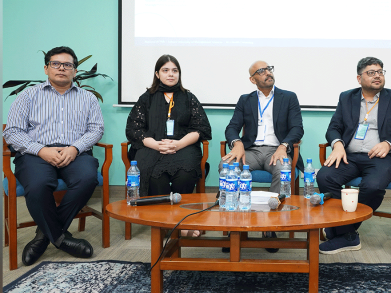
The Gurmani Centre for Languages and Literature (GCLL) cordially invites you to an insightful session titled "How to Read Iqbal."
Muhammad Iqbal remains one of the most influential thinkers of the South Asian intellectual tradition. Yet, reading Iqbal today raises important questions about how we approach his poetry and philosophical writings, interpret his ideas, and engage with the intellectual traditions that shaped his thought. How might we move beyond familiar readings of Iqbal to explore the philosophical, religious, literary, and historical dimensions of his work? What interpretive approaches can help us understand his writings in the context of modernity, religion, and the wider Persianate and South Asian worlds?
Bringing together perspectives from religious thought and Persian literary traditions, this discussion will explore different ways of reading Iqbal and reflect on the continuing relevance of his ideas for contemporary readers.
About the Speakers:
Nauman Faizi is an Associate Professor of Religion at LUMS. His research interests include philosophy of religion, hermeneutics, semiotics, and modern Islamic thought. His book, God, Science, and Self: Muhammad Iqbal’s Reconstruction of Religious Thought (McGill-Queen's University Press, 2021), offers a sustained engagement with Iqbal’s philosophical reconstruction of religious thought.
Fatima Fayyaz brings extensive expertise in medieval Central Asian hagiographical literature, modern Afghan-Persian literature, and Persianate codicology. Her work emphasises the cross-cultural connections of Central Asian Sufis across the South Asian region. Her ongoing research examines the influence of Ferdowsi Tusi’s Shahnameh on the lyrical poetry and prose of the later Mughal period, offering a deep understanding of the Persian literary heritage that profoundly influenced Iqbal.
To register, click here.