

LUMS and American Business Forum Host “From Stabilisation to Growth: Pakistan’s Long-Term Reform Agenda”
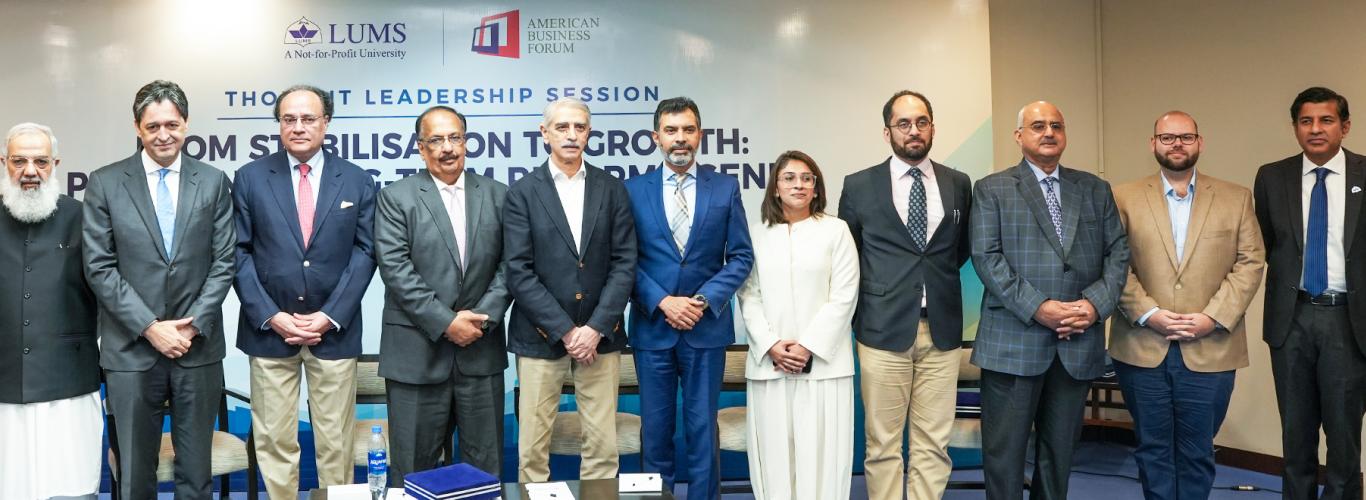


How can Pakistan translate economic stabilisation into sustained growth? A thought leadership session hosted jointly by LUMS and the American Business Forum (ABF) on October 24, 2026, brought together leaders from government, central banking, industry, and fintech to examine the reforms needed to move the economy forward.
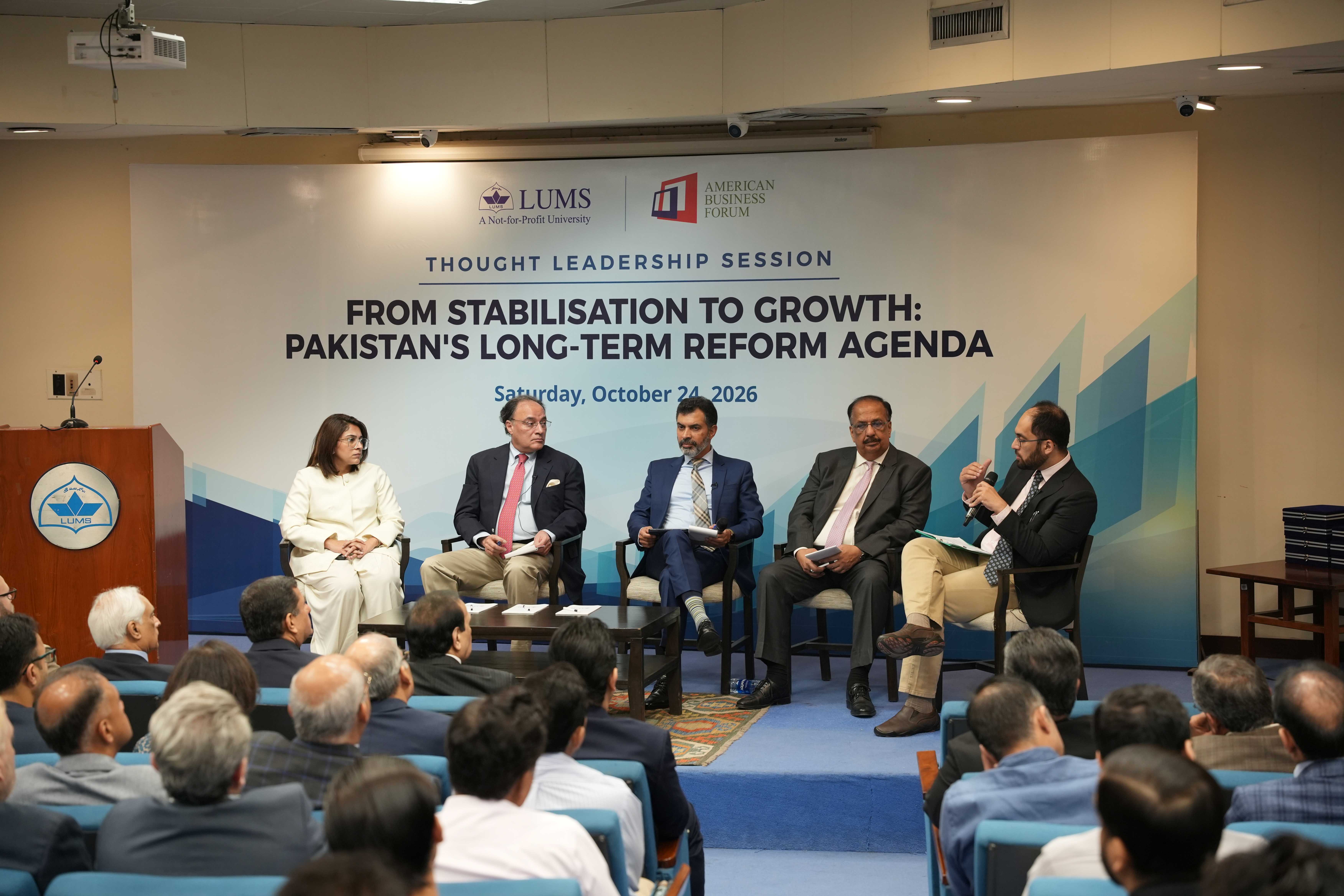
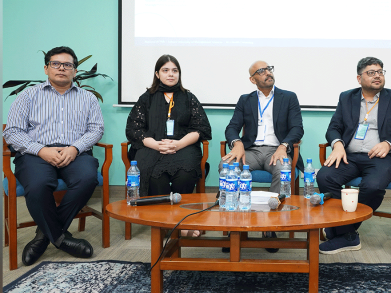
Held at the Sayeed Saigol Auditorium, the session, “From Stabilisation to Growth: Pakistan’s Long-Term Reform Agenda,” featured Senator Muhammad Aurangzeb, Federal Minister for Finance and Revenue; Dr. Reza Baqir, former Governor of the State Bank of Pakistan; Mr. Salman Burney, Vice Chairman of Habib Group and former VP/Area GM at GSK; and Ms. Halima Iqbal, Founder and CEO of Oraan. Dr. Ali Hasanain, Associate Professor in the Department of Economics at LUMS, moderated the discussion.
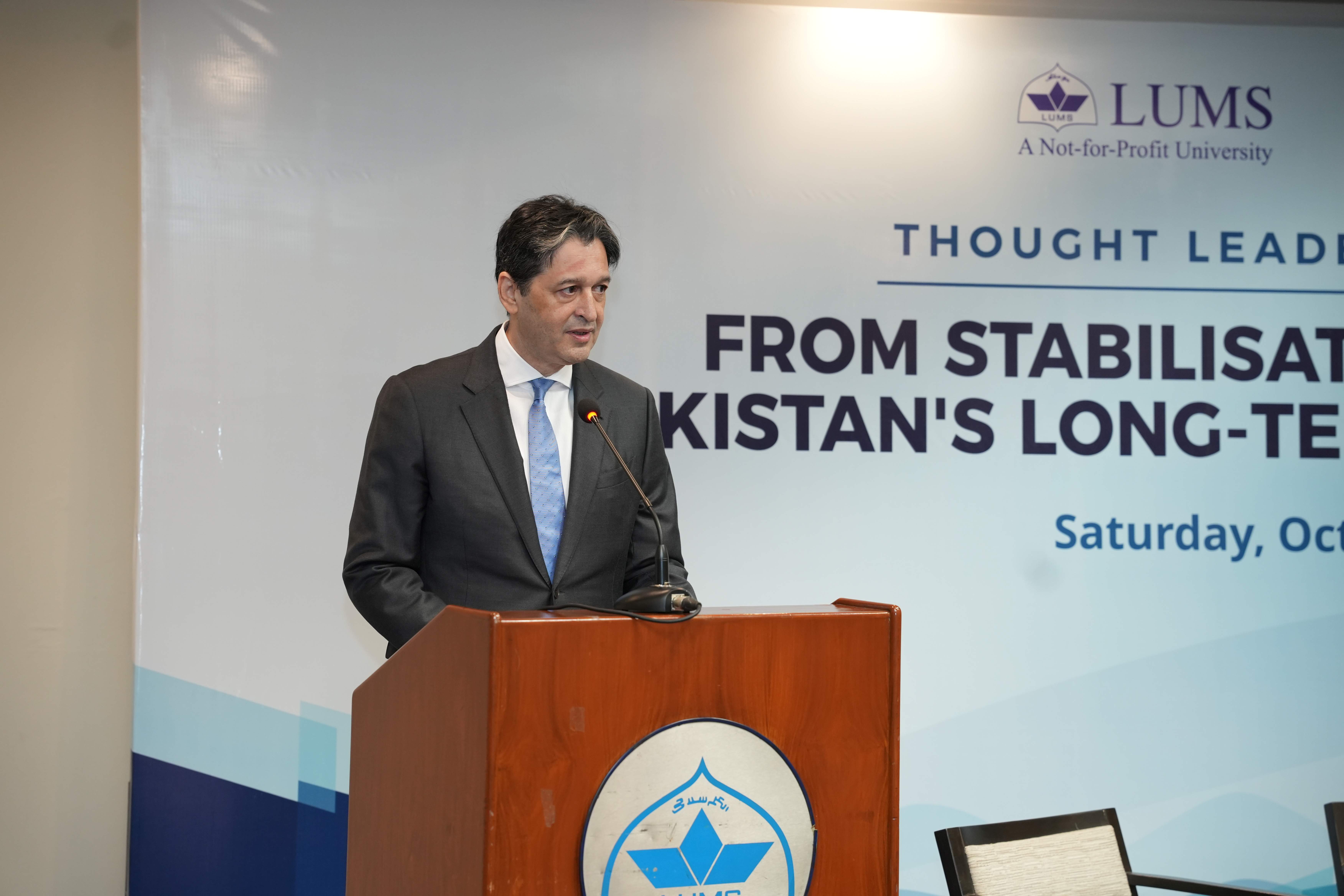
Mr. Osman Khalid Waheed, President, ABF, opened the session, which explored policy and business priorities spanning investment, productivity, exports, and women’s participation in the economy.
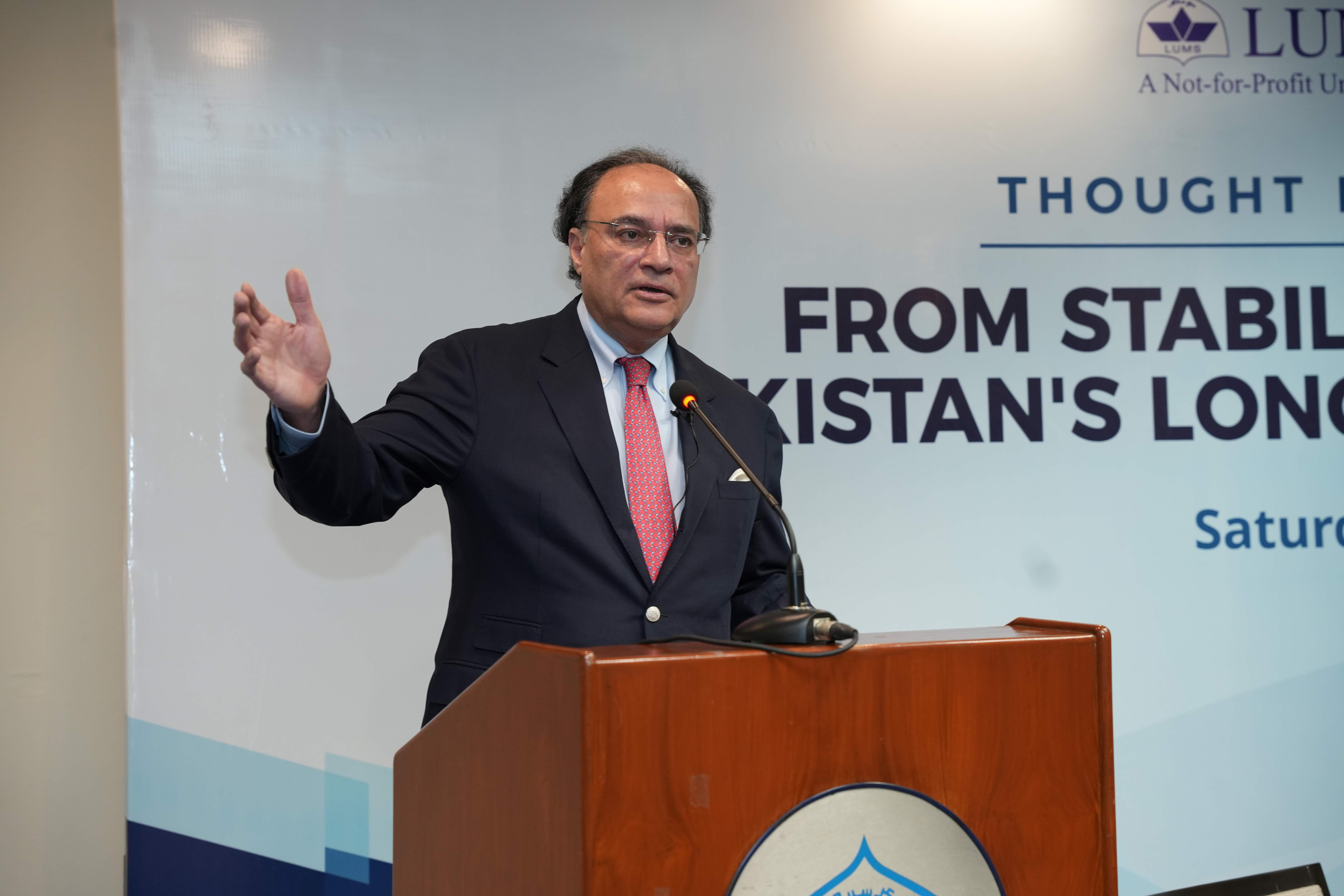 | 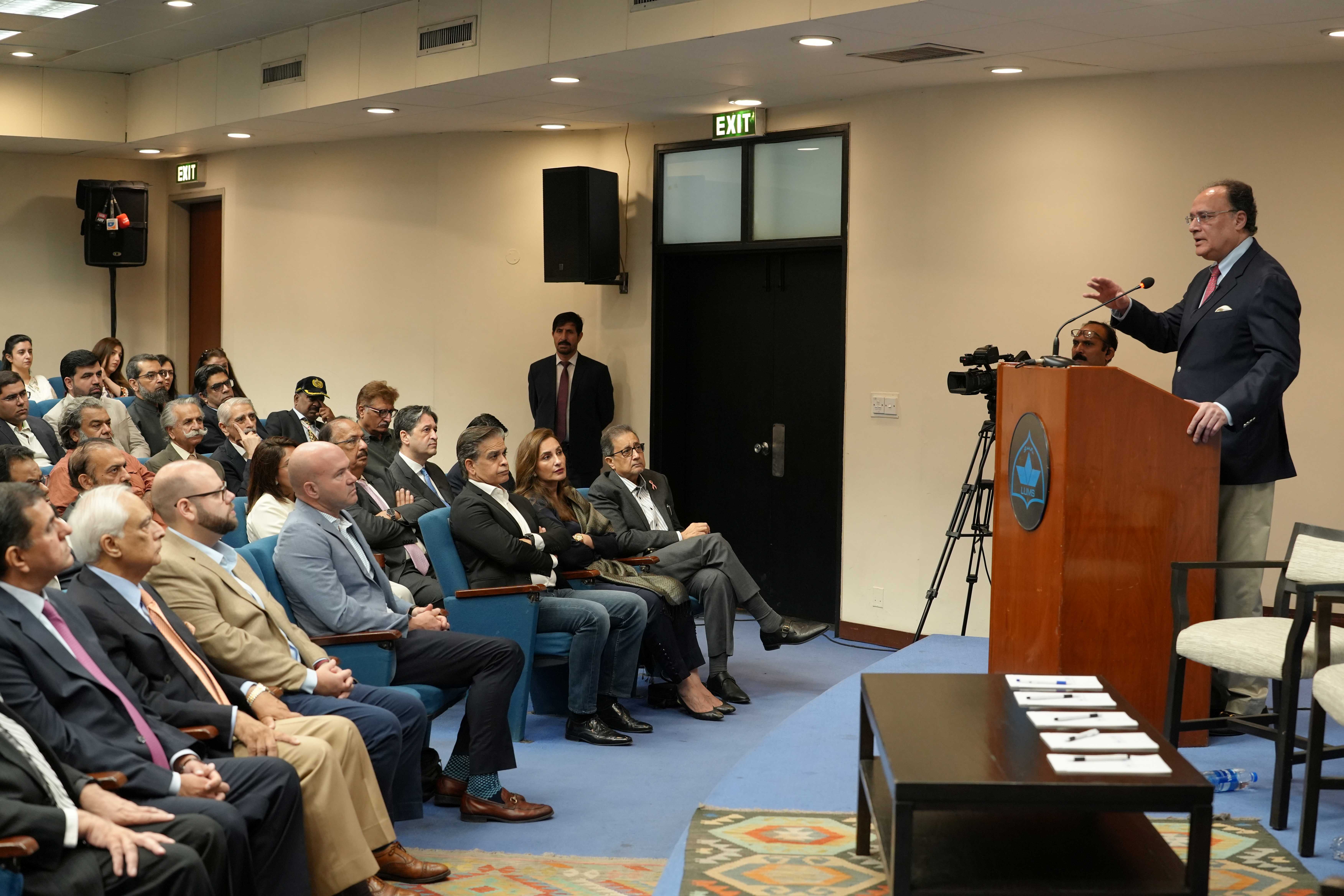 |
Senator Aurangzeb emphasised the need for businesses to adapt their operating and revenue models to changing global conditions. He highlighted productivity as essential to international competitiveness and stressed that growth must generate employment, with greater participation by women in the workforce. The Minister reiterated the government’s commitment to tariff reform to lower input costs for exporters. He also discussed efforts to improve the tax system, encourage private-sector participation, and address energy costs to help businesses invest and expand.
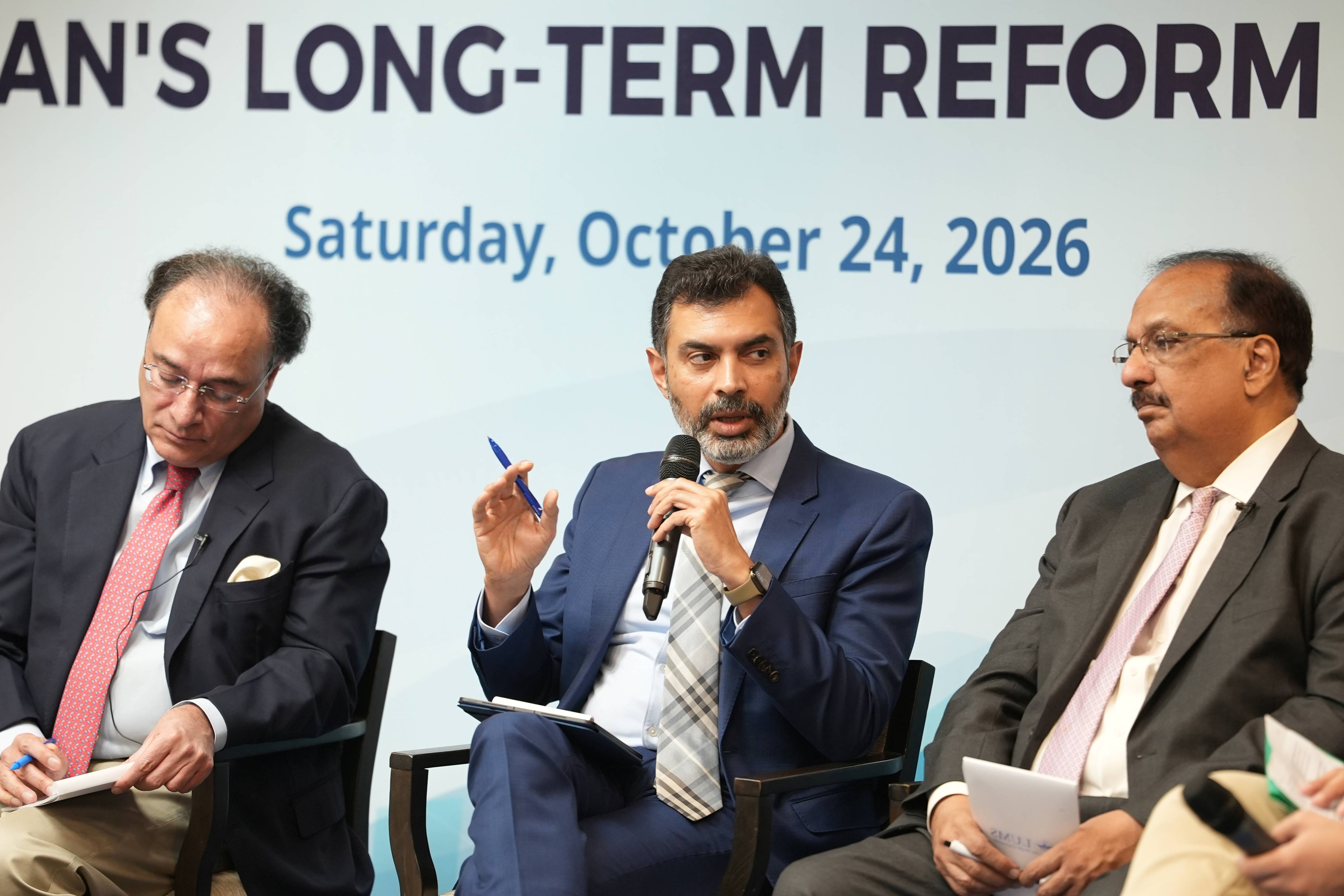
Offering a central banking perspective, Dr. Baqir explained that exchange-rate adjustments alone could not sustain export growth without investment in productive capacity. He underscored the need to strengthen businesses’ ability to produce and compete internationally.
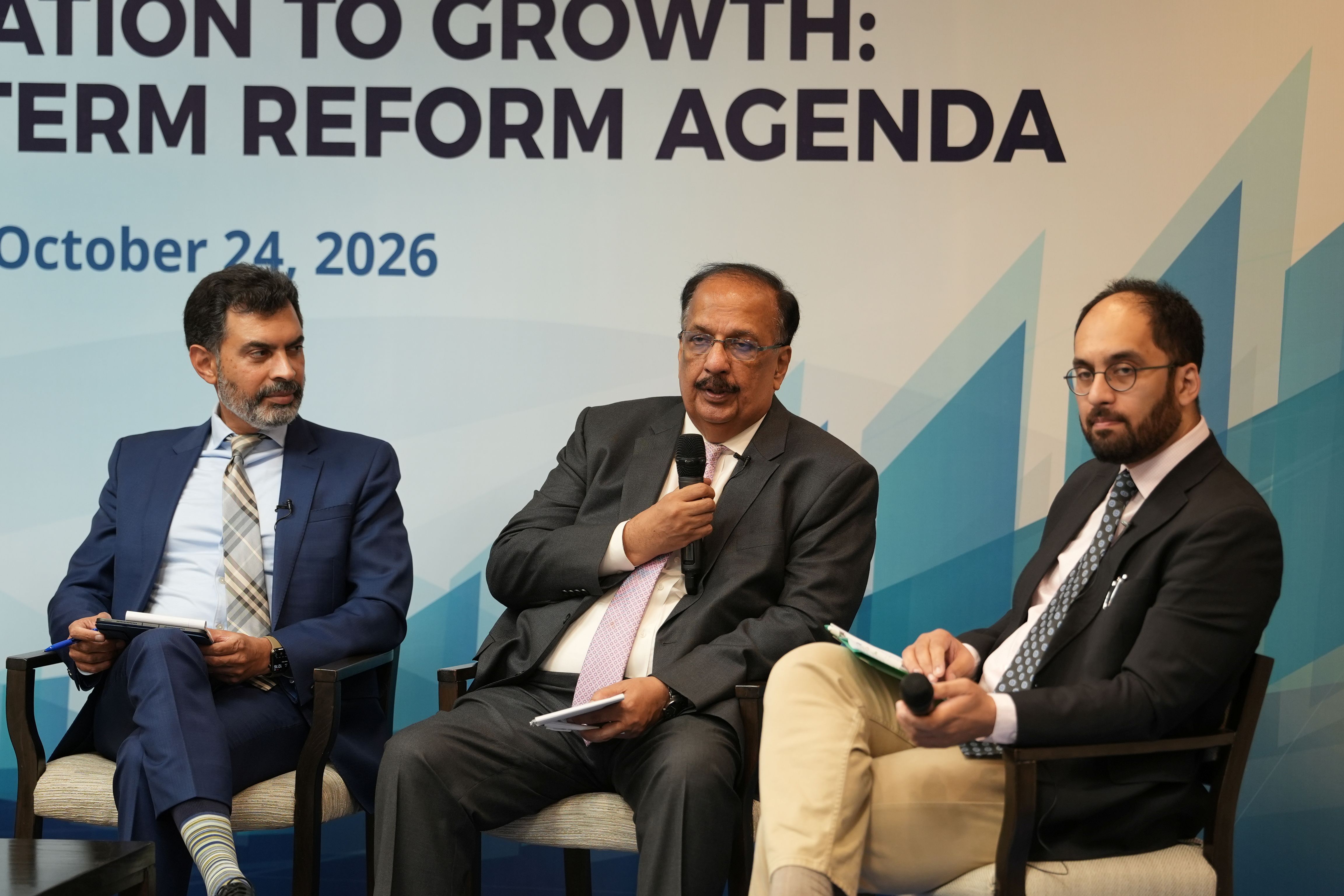
Mr. Burney noted that economic pressures had encouraged companies to improve energy efficiency and productivity. He urged Pakistani businesses to identify sectors in which they held a competitive advantage and invest more actively in international markets.
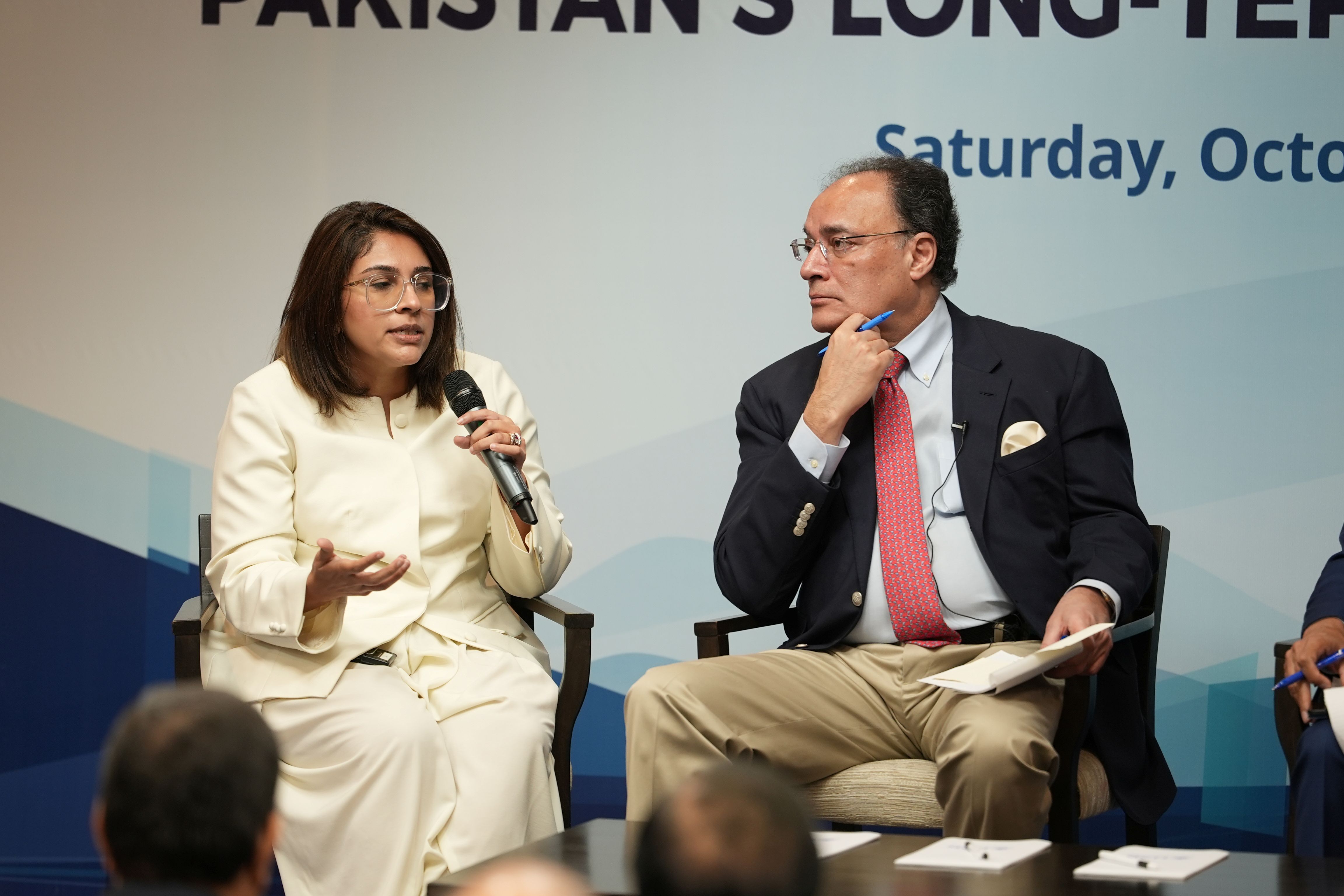
Ms. Iqbal brought a fintech perspective to the discussion on women’s participation in the economy.
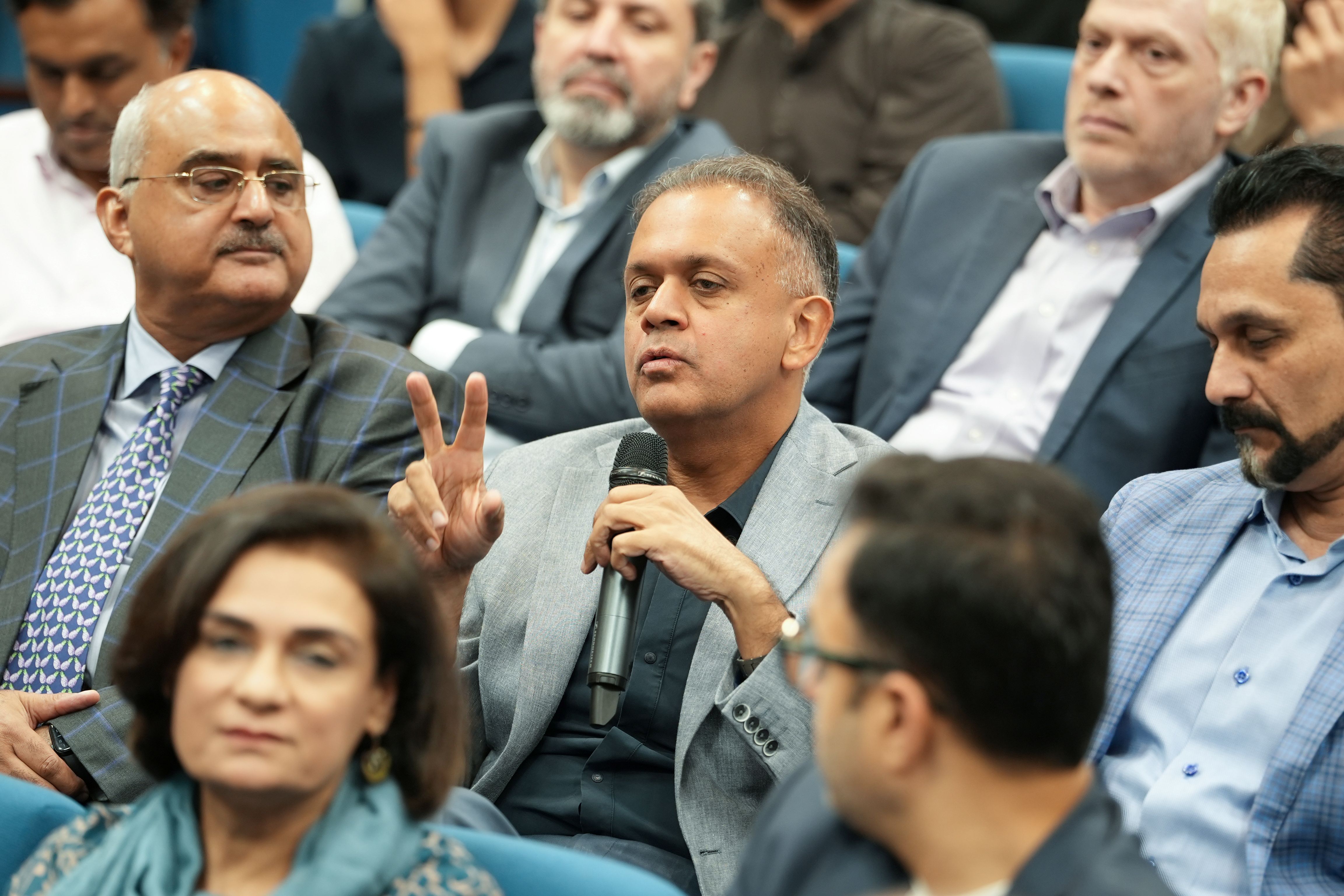
Moderated by Dr. Hasanain, the exchange examined the structural changes needed to address recurring economic challenges. An audience Q&A provided an opportunity for participants to engage directly with the panellists.
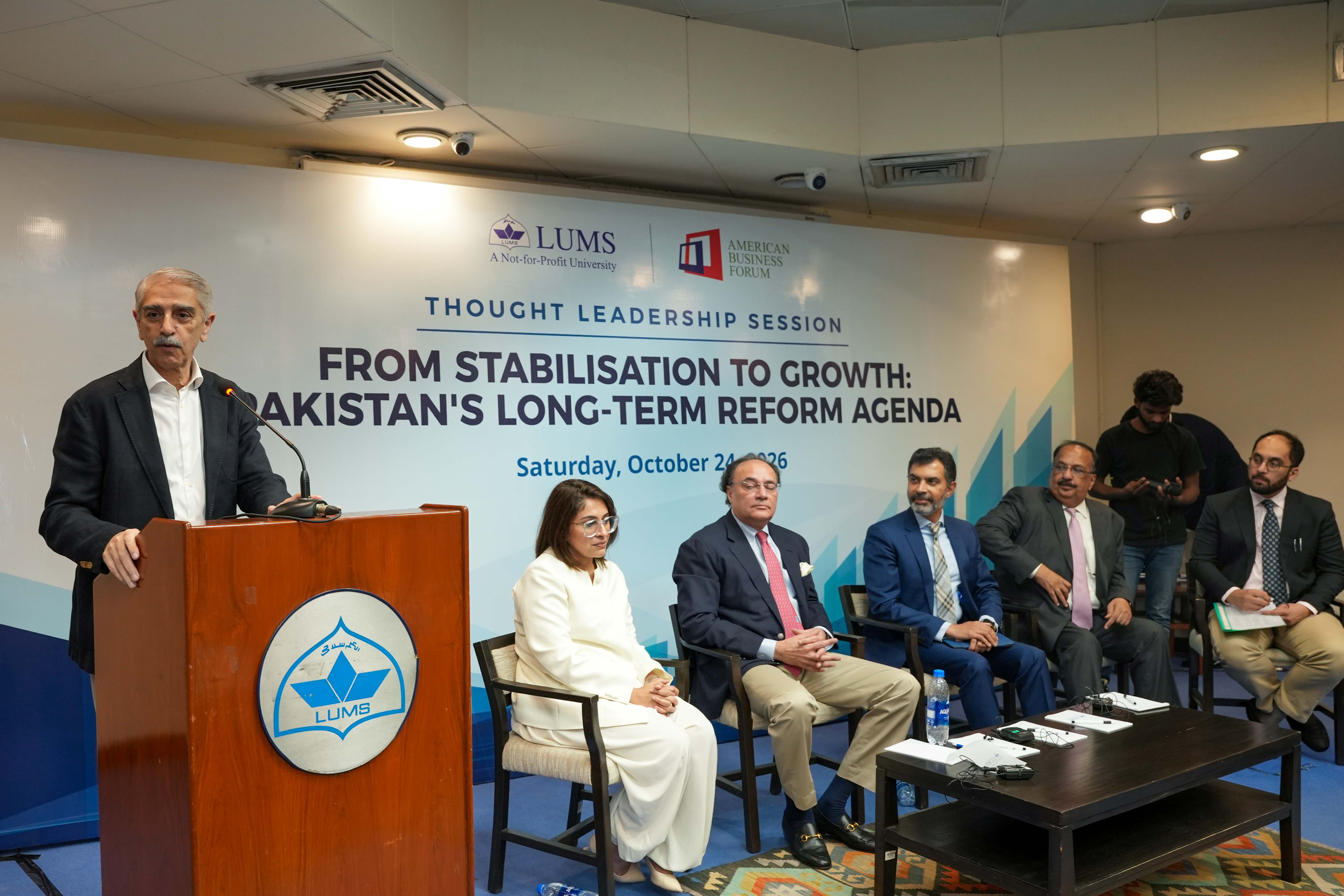
Mr. Shahid Hussain, Rector, LUMS, concluded the session by thanking the speakers and participants. The discussion connected policy priorities with business experience, offering perspectives on the reforms needed to turn stabilisation into lasting economic progress.